
In industrial fluid transfer, a hose’s ability to safely withstand pressure is a key factor in determining its application, material, and construction. OrientFlex specializes in offering a wide range of hoses, which include PVC (polyvinyl chloride) and PU (polyurethane) hoses. Understanding the difference between high-pressure and low-pressure hoses is key to optimizing operations and making sure of safety.
What is the definition of high pressure and low pressure?
The primary difference lies in the hose’s maximum working pressure (MWP), the highest pressure it can sustain. While specific pressure ratings vary by hose type and industry standards, they are generally:
Low-pressure hoses are typically designed for pressures up to approximately 250-500 PSI (approximately 1.7-3.4 MPa). They are suitable for light-duty applications where fluid or air flow is of primary concern rather than extreme force.
High-pressure hoses are designed to withstand extremely high pressures, typically starting at 500 PSI and exceeding 5,000 PSI (over 34 MPa), depending on the specific product and its intended use. These hoses are designed for demanding, pressure-driven tasks.
What is the Difference Between High and Low Pressure Hoses?
Hose Construction
The pressure rating directly determines the hose’s internal construction, particularly its reinforcement:
Low-Pressure PVC/PU Hoses: These hoses typically have a simpler construction. For PVC hoses like our garden hoses or PVC air hoses, a single braid or thin spiral reinforcement provides flexibility and moderate pressure-carrying capacity. PU pneumatic hoses, on the other hand, leverage the inherent toughness of polyurethane for strength, typically featuring a precise wall thickness and sometimes a lightweight braid. These hoses are typically characterized by flexibility and ease of handling.
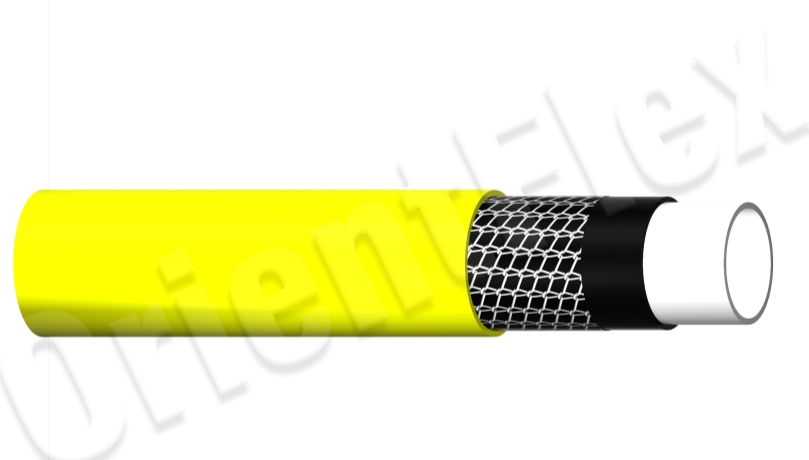
High-Pressure PVC/PU Hoses: These hoses are designed for high resilience. Our PVC high-pressure spray hoses and certain PU pneumatic hoses designed for higher pressures feature a robust, multi-layer design. This includes a thicker inner tube, multiple layers of high-strength synthetic fiber braid (for PVC hoses) or specialized fabric/steel wire reinforcement (for certain PU hoses), and a durable outer cover. This complex engineering ensures the hose will not burst or deform under severe pressure fluctuations.
Key Performance Characteristics
Besides pressure, construction differences impact other important performance aspects:
- Flexibility and Weight: Low-pressure hoses are generally lighter and more flexible, making them easier to handle and route, especially our polyurethane hoses, known for their excellent bend radius and resilience. High-pressure hoses tend to be stiffer and heavier due to their robust, reinforced construction.
- Durability and Abrasion Resistance: While all our hoses are durable, high-pressure hoses are specifically designed to withstand internal pressure, while many polyurethane hoses offer excellent external abrasion resistance due to their rugged outer shell.
- Temperature Range and Chemical Resistance: The specific PVC or polyurethane compound used impacts high-temperature resistance and resistance to various chemicals and is tailored to the hose’s intended pressure and application.
How to Choose the Right Hose?
Selecting the correct pressure rating is crucial for safety, efficiency, and hose life:
Low-pressure PVC/PU hoses excel in the following applications:
- General water transfer (e.g., garden hoses, lightweight lay-flat hoses);
- Low-pressure pneumatic lines for small tools or general workshop use (e.g., PVC air hoses, basic pneumatic hoses);
- Drainage or suction in non-critical situations (e.g., some PVC suction hoses);
- Ventilation and dust collection (e.g., duct and vacuum hoses);

High-pressure PVC/PU hoses are essential for the following uses:
- Agricultural pesticide/fertilizer spraying (e.g., PVC high-pressure spray hoses);
- Industrial cleaning applications;
- Heavy-duty pneumatic systems and air tools requiring continuous high pressure (e.g., some pneumatic hoses);
- High-pressure cleaning equipment (PVC or PU hoses for specific pressure ranges);
- Specialized fluid transfer requiring higher pressures (e.g., some PVC reinforced hoses);
OrientFlex: Your Partner for Precision Hose Solutions
At OrientFlex, we understand that the difference between “high” and “low” pressures is crucial to your specific needs. As a leading hose manufacturer in China, we produce a comprehensive range of hoses and fittings, leveraging our deep expertise in a variety of materials, including PVC and PU. We go beyond just products and offer customizable, high-quality, and cost-effective solutions precisely engineered to your specific pressure needs, ensuring optimal performance, safety, and durability for your industrial operations.