
Does your yard have lots of dust and dirt? It’s time to spruce it up! But how much do you really know about pressure washers? You can use one to scrub away years of grime and make the outside of your home look brand new again.
Sounds simple, right? Well, there’s a catch.
If you don’t know what you’re doing, a pressure washer can actually do some damage. That’s why it’s crucial to do your homework before you start. If you’ve never used a pressure washer before, you’re in the right place. Let Orientflex tell you how to pick the right one.
Different Types of Pressure Washers
Gas or Electric Pressure Washer
Pressure washers work by using a pump to boost the pressure of the water flowing through the attached hose. That pump can be powered by gasoline or electricity, and both options have their pluses and minuses.
Gas Pressure Washers
Gas-powered washers generally offer higher PSI (pounds of pressure per square inch) and GPM (gallons of water per minute) than their electric counterparts. That extra power means they can clean surfaces much faster.
Pros of Gas Pressure Washers
Gas-powered pressure washers can produce a wide range of PSI and GPM levels. Not only do they clean quicker and more efficiently than electric models, but you also have more choices.
They’re cordless. So, if you’re not near an electrical outlet, you can still get the job done.
Cons of Gas Pressure Washers
Gasoline engines, even the small ones, need regular maintenance. You’ll have to change the oil periodically and make sure you use the proper fuel additives if you plan to store the machine for a long time.
They’re louder than electric engines and produce emissions. Also, you should never use a gas-powered pressure washer indoors or in covered spaces.
Electric pressure washers
Electric washers can be handier than gas-powered ones in certain situations. Plus, you don’t have to worry about gas fumes.
Pros of Electric Pressure Washers
Electric pressure washers don’t emit harmful pollutants. If you had to, you could use one indoors – though you’d need hearing protection and a reliable way to get rid of the water.
An electric engine means no oil changes or other maintenance tasks.
Cons of Electric Pressure Washers
An electric pressure washer just can’t match the power of a gas-powered model. If you need to clean a large or especially dirty area, it’ll take much longer to finish the job. (And you might not get the results you were hoping for.)
Since they require a power outlet, electric pressure washers aren’t as portable as gasoline versions.
How to Pressure Wash
Pressure washing can be a messy and dangerous task if not done correctly. So, it’s important to take the time to get ready properly.
Pressure Washing Safety Tips
Here are some safety tips for both beginners and pros.
Eye & Hearing Protection
Pressure washers are noisy, and the high-pressure water means debris and water will spray back at you. So, make sure you wear eye and hearing protection.
Use Both Hands
Until you get comfortable with the pressure washer, hold the wand firmly with both hands so it doesn’t slip out of your grip.
Don’t Get Too Close
Keep the spray tip about 18 inches away from the surface you’re cleaning to lower the risk of damage.
Cleaning Siding With a Pressure Washer
Siding, especially vinyl siding, tends to get dull and grow mildew. Fortunately, the best way to brighten up your home’s exterior is with a thorough pressure washing.
To start, take a walk around the outside of your house. Look for loose siding pieces, cracks, and other openings that could let water in during the cleaning process.
Patch up these problem areas before you pressure wash.
Once you’re ready to start cleaning, follow these steps:
Attach the soaping nozzle to the pressure washer’s wand and fill the machine’s detergent reservoir.
Use the pressure washer to apply soap to the siding. If your house has any especially dirty areas, you may need to pretreat them and/or use a scrub brush to loosen the dirt or mildew.
Switch to the green- or white-tipped nozzle to rinse the siding. Both of these nozzles produce a stronger, higher-pressure stream of water, so rinsing away the dirt and soap and clearing any tough stains should be much easier.
Depending on the size of your home, this job might take a while. Don’t rush, especially if you need to use a ladder. If it takes a few days or weekends to complete, that’s okay. Your safety is the top priority.
Depending on the weather and other environmental factors, you’ll probably need to wash your siding every couple of years.
Pressure Washer Accessories
Without accessories, your pressure washer isn’t much use. It’d be like having a drill without any drill bits.
Pressure Washer Hoses
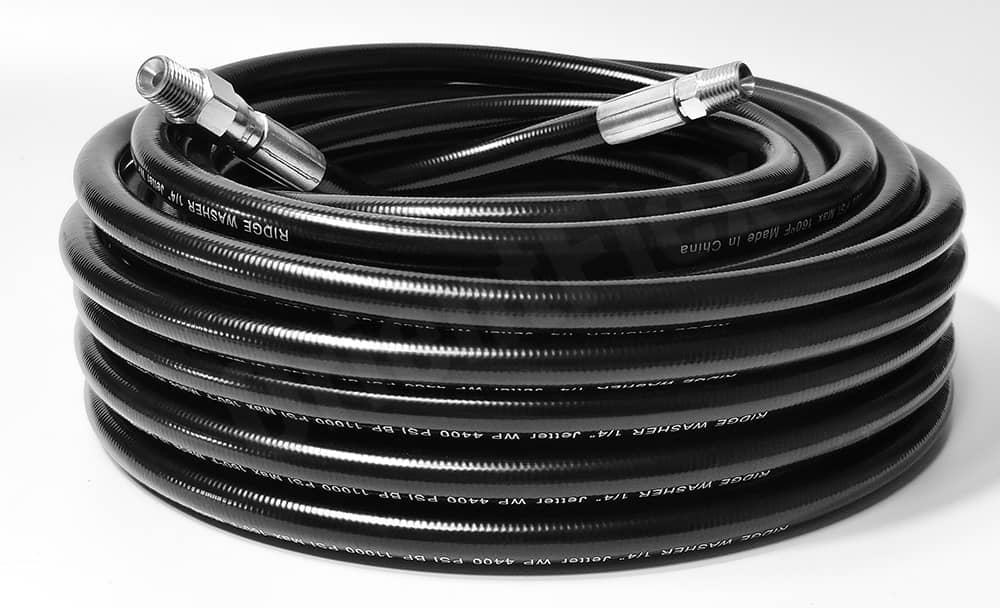
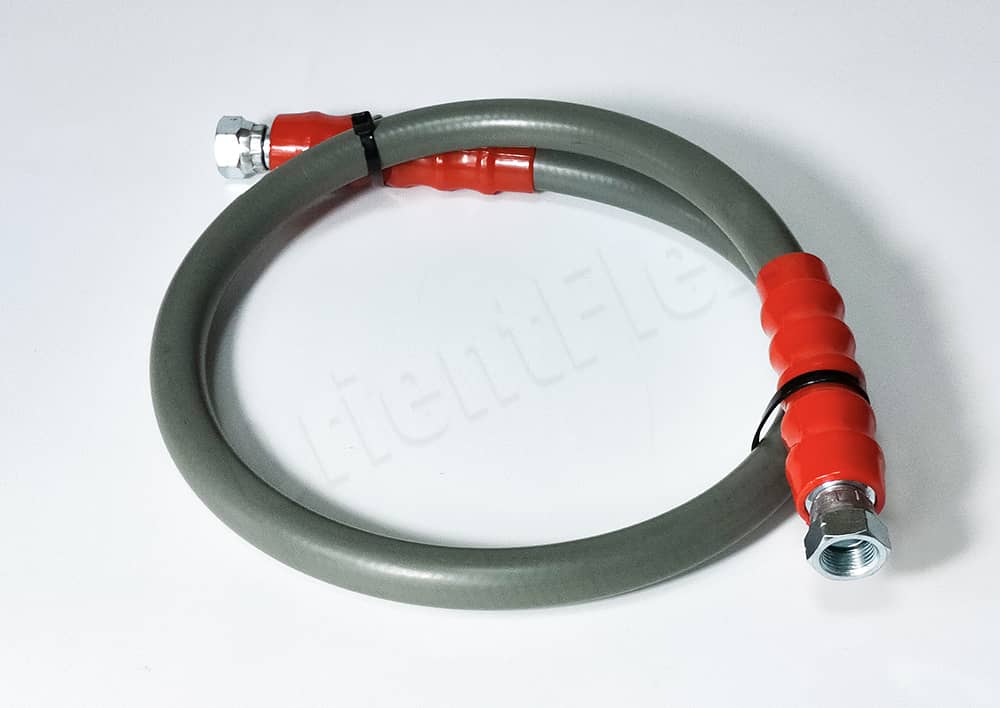
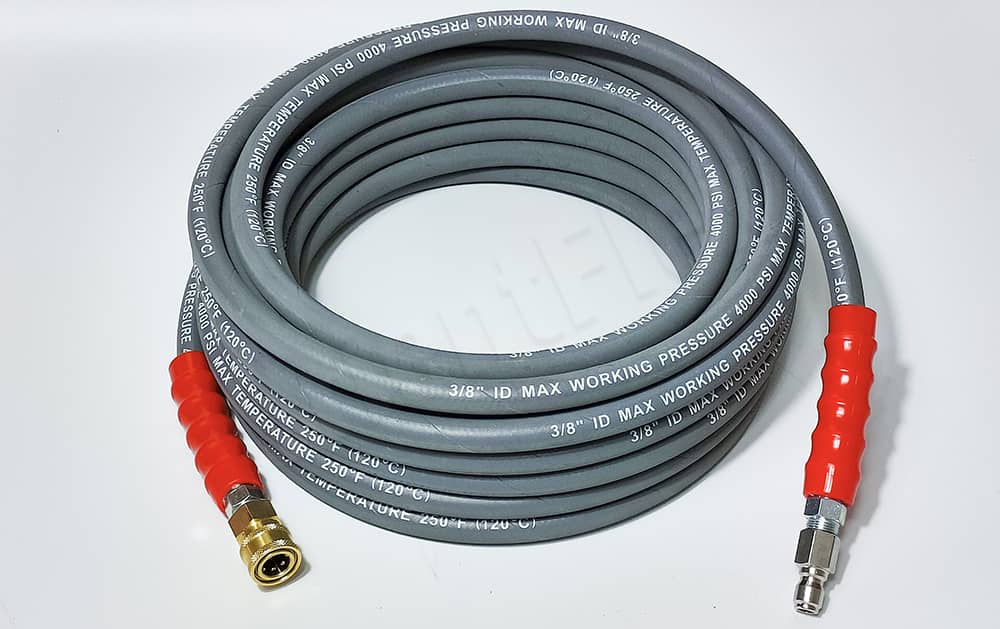
You’ll probably want a 50 ft long hose. If it’s shorter, you’ll have to keep moving your machine. Make sure you get a quality hose with the right PSI rating to match your machine. A poor quality hose will wear out faster, is more likely to leak or kink, and will usually be less flexible and harder to work with.
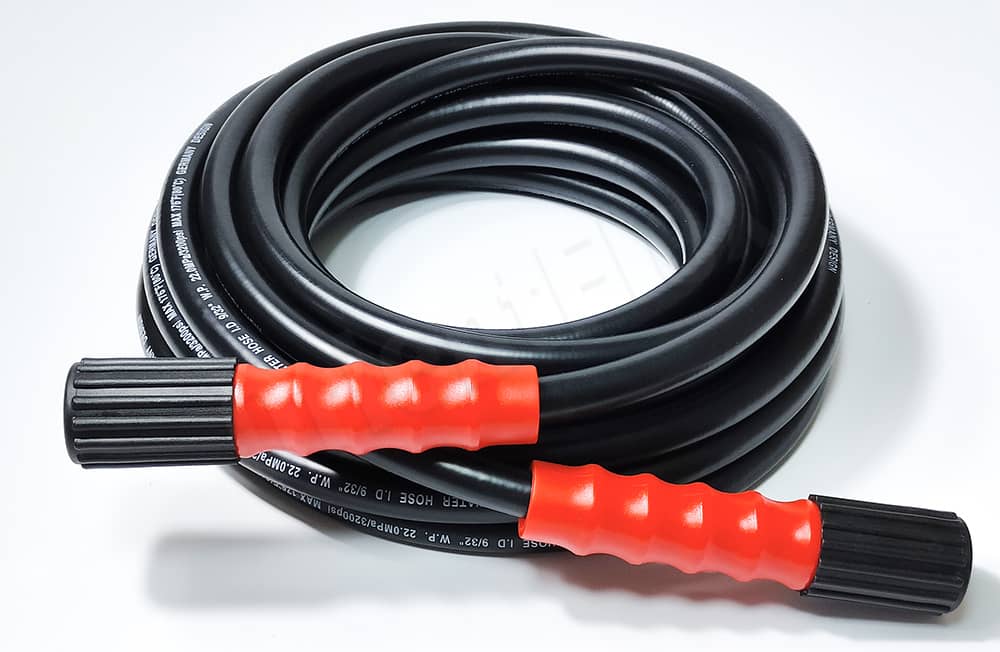
The high-pressure cleaning tube of a good pressure washer is super important. It has to be able to handle the pressure to do a great job cleaning for you.
The Importance of a High Pressure Washer Hose
Ensuring high-pressure operation
Pressure washers create high-pressure water flows. A top-notch hose is built to handle these high pressures without bursting or leaking. For example, in industrial pressure washers that might operate at 2000 – 5000 PSI, a sub-par hose wouldn’t be able to hold the water flow, making the pressure washer useless.
Preventing kinking
High-quality pressure washer hoses are made with materials and designs that resist kinking. Kinking can block the water flow, reduce the pressure at the spray tip, and potentially damage the pressure washer pump. A good hose stays flexible even when bent around corners or a obstacle, ensuring a continuous and consistent water flow.
Durability and long-term use
These hoses are made from tough materials like high-strength synthetic rubbers or reinforced thermoplastics. They can stand up to abrasion, UV radiation, and chemical exposure. For instance, outside, a high-quality hose won’t break down quickly under the sun’s rays, and in industrial settings, it can resist contact with oil, grease, and cleaning chemicals, ensuring a long service life and fewer replacements.
Safety
A high-quality pressure washer hose is vital for safety. Leaking or burst hoses can make water spray out of control, which could hurt operators or damage nearby equipment. By staying intact under high-pressure conditions, a good hose cuts down on these safety risks.
Optimal cleaning performance
The hose’s ability to keep a steady water pressure and flow is key for getting good cleaning results. Whether it’s cleaning a car, a building facade, or industrial equipment, a high-quality hose makes sure the pressure washer can deliver the right amount of water at the needed pressure, leading to more efficient and thorough cleaning.
Orientflex stocks a wide variety of pressure washers, fittings, nozzles, and adapters. As a professional hose supplier, if you have any questions, you can reach us at any time.