
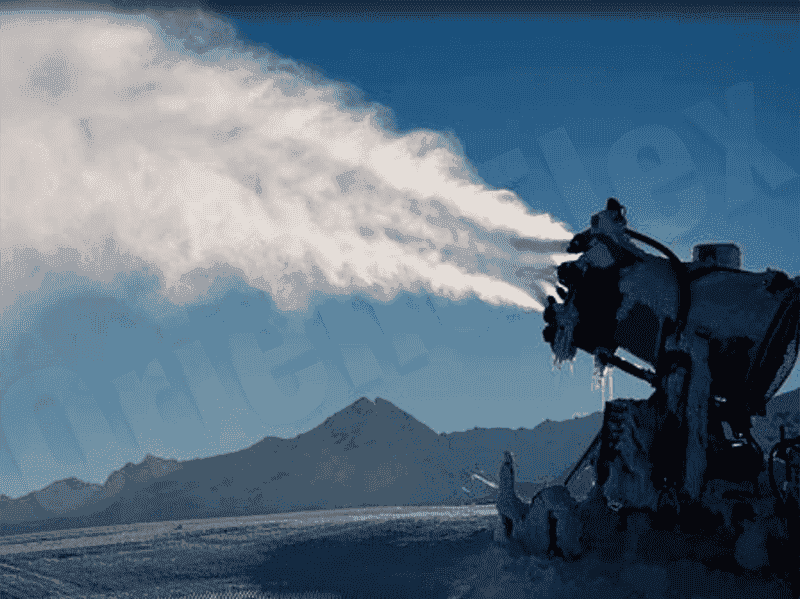
Across Russia’s vast territory, the harsh winter cold poses severe challenges to industrial equipment. In key industries such as mining, construction, and agriculture, the efficiency of water resource management directly impacts production safety and progress. However, ordinary industrial hoses often become stiff, brittle, or even crack in sub-zero temperatures, becoming major obstacles to low-temperature operations. Orientflex’s thermoplastic layflat hoses (шланги плоские) , with their unique material properties and structural design, offer a reliable choice for fluid transportation in extremely cold environments.
I. Core Challenges of Cold Climates to Industrial Hoses
Low-temperature environments affect hose performance in multiple ways:
- Material hardening: In sub-zero temperatures, molecular activity in traditional rubber or plastic hoses slows down, leading to a sharp drop in flexibility and making deployment difficult.
- Structural embrittlement: Repeated freeze-thaw cycles create micro-cracks inside the material, reducing pressure resistance and service life.
- Reduced operational efficiency: Stiff hoses require more labor for deployment and are prone to breaking during dragging, increasing maintenance costs.
In regions like Siberia, winter temperatures often drop below -30°C, and the failure rate of ordinary hoses can be 3-5 times higher than in summer, seriously affecting continuous operations such as mine dewatering and agricultural irrigation.
II. Low-Temperature Performance Advantages of Thermoplastic Materials
Thermoplastic materials such as PVC (ПВХ, поливинилхлорид), PU (ПУ, полиуретан), and TPU (ТПУ, термопластичный полиуретан) have inherent low-temperature adaptability compared to traditional rubber. Here is a performance comparison of three mainstream materials:
| Material Type | Operating Temperature Range (°C) | Low-Temperature Flexibility | Wear Resistance | Hydrolysis Resistance | Typical Applications |
|---|---|---|---|---|---|
| PVC (ПВХ) | -10 to +65 | Moderate | Good | Average | Agricultural irrigation in mild cold regions |
| PU (ПУ) | -40 to +90 | Good | Excellent | Good | Construction drainage, small-to-medium transportation |
| TPU (ТПУ) | -55 to +80 | Excellent | Excellent | Excellent | Extremely cold mining areas, high-pressure transportation |
TPU materials, with their unique molecular structure, maintain segment mobility even at low temperatures. Their minimum operating temperature of -55°C fully covers the needs of most extremely cold regions in Russia. Additionally, thermoplastic materials are lightweight (40% lighter than rubber hoses of the same specification) and recyclable, aligning better with modern industrial environmental requirements.
III. Low-Temperature Adaptability of Layflat Hose (шланг плоский) Structural Design
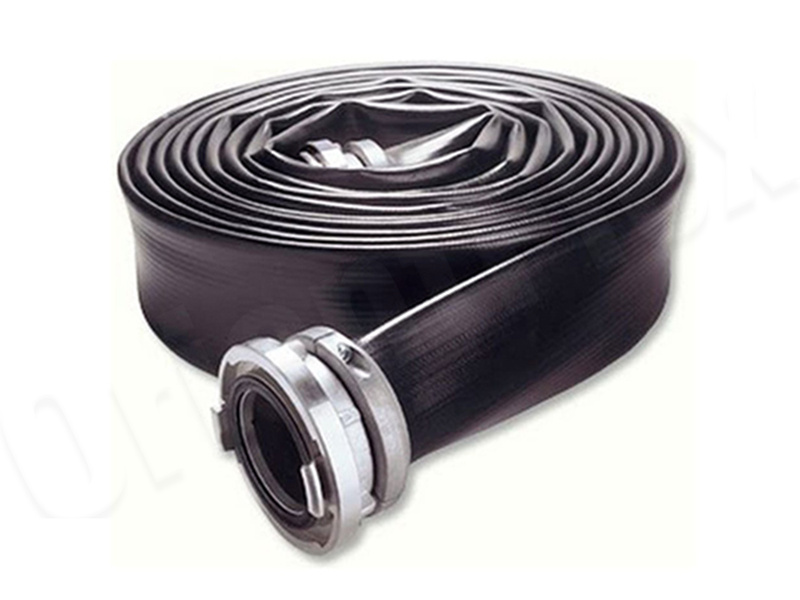
The structural design of layflat hoses (шланги плоские) offers multiple advantages in extremely cold environments:
- Material composite optimization
Through multi-layer co-extrusion technology, thermoplastic materials with different properties are combined:- Inner layer: Low-crystallinity TPU ensures a smooth inner wall and flow efficiency at low temperatures.
- Reinforcement layer: High-strength polyester fiber braided mesh enhances pressure resistance (up to 16bar).
- Outer layer: PU material with anti-UV and anti-wear additives resists physical impacts in low temperatures.
- Manufacturing process breakthroughs
Through-the-weave extrusion technology tightly bonds the inner liner, reinforcement layer, and outer layer, avoiding interlayer separation caused by different material shrinkage rates at low temperatures. This process allows the hose to maintain a bending radius within 3 times its diameter in -30°C bending tests (traditional hoses require 5-6 times), significantly improving deployment flexibility.
- Strict environmental testing
- Low-temperature bending test: 1,000 repeated bends at -40°C without cracking.
- Impact test: Withstanding a 1kg weight dropped from 1m height at -30°C without damage.
- Pressure cycle test: 1,000 cycles between 0-10bar at -25°C without leakage.
IV. Practical Application Scenarios and Efficiency Improvements
In Russian industrial practices, thermoplastic layflat hoses (шланги плоские) have demonstrated significant advantages:
- Mining dewatering
In Siberian gold mining, 8-inch diameter TPU layflat hoses (шланги плоские) achieve a daily drainage capacity of 5,000 cubic meters in -35°C environments. Deployment time is 60% shorter than traditional steel pipes, and annual maintenance costs are reduced by approximately 40%. Their UV-resistant outer layer has a service life of over 3 years under direct summer sunlight. - Agricultural irrigation
In greenhouse planting areas in European Russia, PVC-PU (ПВХ-ПУ) composite layflat hoses (шланги плоские) solve the problem of winter irrigation pipe freezing and cracking. When paired with reel machines, they enable automated deployment—only 2 people are needed to operate a 1,000-meter hose, saving 30% of labor compared to traditional irrigation pipes. - Emergency water transportation
In winter disaster relief in the Far East, quickly connectable layflat hose (шланг плоский) systems can set up temporary water supply lines within 2 hours. Their compact coiling (100-meter hose with a coil diameter of only 0.8m) facilitates helicopter transportation, significantly improving emergency response speed.
V. Selection and Application Recommendations
When choosing hoses for extremely cold environments, focus on:
- Temperature matching: Select materials based on the minimum temperature of the operating area (e.g., TPU is preferred for Siberia).
- Pressure requirements: For high-pressure scenarios (such as mine dewatering), choose products with a reinforcement layer density ≥200D.
- Connection method: Prioritize quick-clip joints to reduce installation time in low temperatures.
- Storage conditions: Avoid outdoor storage during non-use periods; it is recommended to coil and store in environments above 5°C.
For scenarios with special needs (such as extra-large diameters or custom color identification), personalized adaptation can be achieved by adjusting material formulas and production processes to ensure seamless integration with existing equipment.
In Russia’s extreme climatic conditions, thermoplastic layflat hoses (шланги плоские) effectively solve the low-temperature failure problems of traditional hoses through material science and structural innovation. Their comprehensive advantages in efficiency improvement, cost control, and safety assurance are making them the preferred solution for industrial fluid transportation, providing solid support for sustainable production in cold regions.
At Orientflex, we understand that every Russian operation has unique needs. Whether you require custom lengths, diameter adjustments, material tweaks (from PVC/ПВХ to TPU/ТПУ), or specialized solutions for extreme cold, our team of experts is ready to deliver tailored layflat hose (шланг плоский) systems. Contact us today to discuss your specific requirements—let’s build a solution that keeps your operations running smoothly, even in Russia’s harshest winters.