
Do you not know where to start when buying chemical hoses?Are you still worried about how to better clean the chemical hose, today ORIENTFLEX takes you to understand clearly.
How to Pick the Right Industrial Hose:
Industrial hoses are often employed in critical air, fume, dust, severe service, and commercial vacuum operations, as well as light material handling. It is essential to choose the one best suited for the requirements and restrictions of the application. Some of the key factors to keep in mind when selecting an industrial hose include:
1.Size
There are two critical measurements when it comes to industrial hose sizes: diameter and length.
The diameter of a hose can refer to either the outside—i.e., outer—diameter (OD) or the inside diameter (ID). Most industrial hose suppliers categorize their inventory by inside diameters. Keeping in mind an industrial hose’s ID is important because:
Ill-fitting hoses are more likely to have leaks, even when used with the proper seals and field adjustments.
Diameters that are too small or too large can facilitate improper flow rates or speeds, which can result in damage to the system.
Some industries, such as the food and beverage, pharmaceutical, HVAC, or construction industries, have strict regulations that dictate hosing size requirements.
The length of a hose is also crucial as the hose needs to be able to accommodate bending and flexing during system operations without risk of kinks or tangling. While too short of a hose length can result in damage due to shrinkage under pressure, too long of a hose can cause friction-related damage.
2.Application
The intended application for an industrial hose largely determines the type that should be used. For example:
a facility or outdoors
blowing (PSI) or vacuum (Hg) application
If it will need to be static dissipative
If it will be exposed to high heat or freezing temperatures
3.Material
In regard to material, when it comes to industrial hoses, it’s important to consider both the material used to manufacture the hose and the material that will run through it. For example, while some rubber and plastic hoses can handle acidic or caustic compounds, others cannot.
In addition to helping industry professionals select the right type of hose for their project, these three considerations can also help them determine the types of fittings they need. Knowing the size, application, and materials employed prior to beginning the sourcing stage can help find the right materials faster.
How to Clean a Chemical Hose:
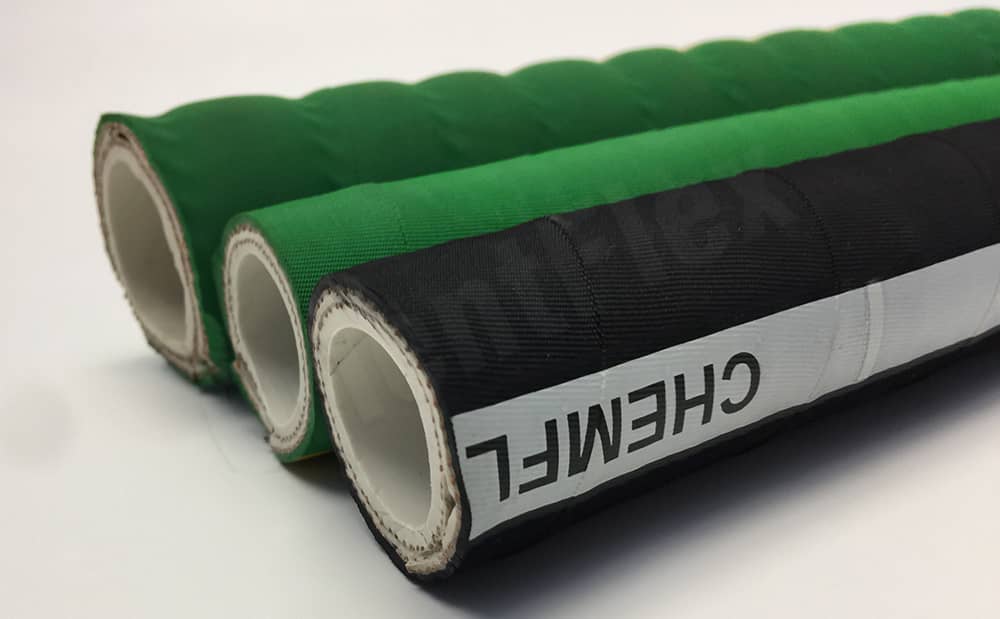
The most method of cleaning a chemical hose is by flushing water or other cleaning solution through it. This will clean all the chemicals and impurities. Cleaning procedures for hoses may differ from one industry to another. It depends on the kind of use the hoses are being put to. Here are a few recommendations that will come handy for those who are involved in the cleaning of hoses.
1.Chemical hoses involve the use of hazardous chemicals. These chemicals can harm you if you get in touch with them. It is recommended that all staff personnel cleaning the chemical hoses must wear protective gear to protect themselves from the harmful effects of chemicals. You should wear protective glasses, eye masks, gloves, and hats.
2.The residue chemicals that are to be cleaned should be readily soluble in the cleaning solution. This will ensure that the residue coming out of the hose isn’t just chemicals.
The cleaning solution should also be compatible with the hose lining and fittings.
3.The entire combination of material that is being flushed out of the hose should be treated according to the guidelines prescribed by the concerned authorities. If left untreated, this material can harm those living in the area due to the chemicals present in it.
4.If you are using cleaning devices to clean the hose, you should exercise extreme care. If not inserted properly, these devices can damage the inside of the hoses.
5.Sometimes, steam is also used to clean hoses. It is not possible for a common man to do this by himself. Steam cleaningis not recommended commonly. This is because it requires proper operating temperatures and pressures. If not done correctly, it can even lead to the bursting of the hose. You can contact professional hose cleaners to do this job for you. They have all the required equipment needed to clean the hoses.
6.Once the tubes are cleaned, you need to ensure that no chemical residue remains behind. For this, you can hang the tubes upside down for a few hours so that all the remaining residue drains off. This method is especially recommended to clean convoluted hoses.
7.If it is not possible to hang the hoses after cleaning, you can also run hot air through them for drying.
There are a lot of hoses that ORIENTFLEX really want to share with you.Please focus on us.
UHMWPE Chemical Suction Hose
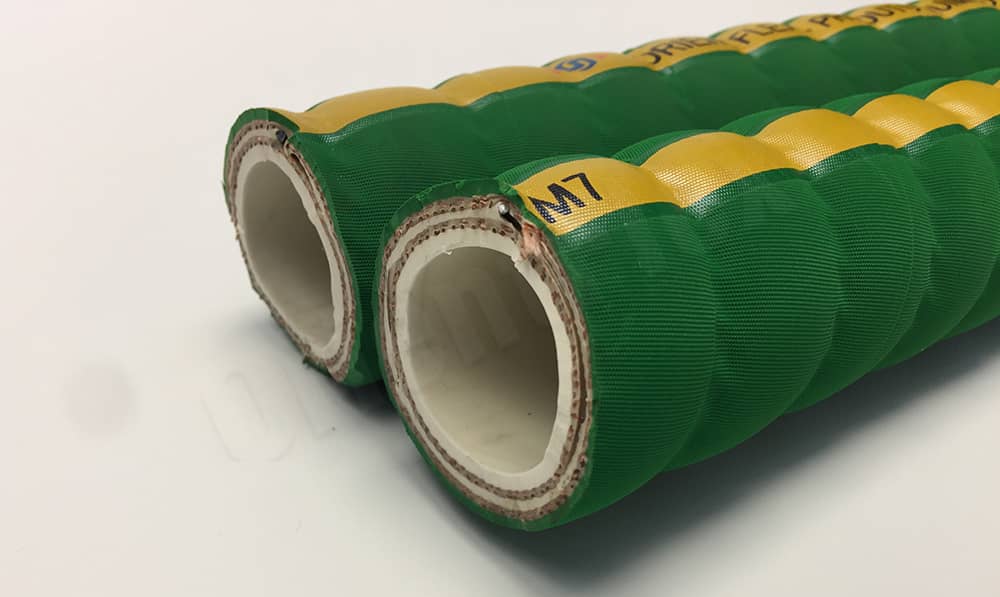
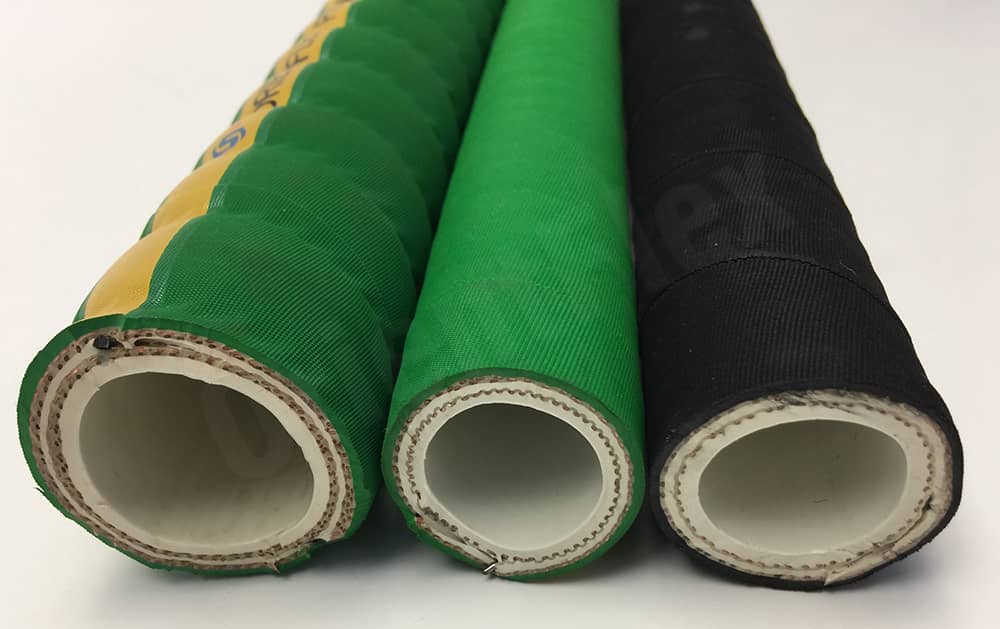
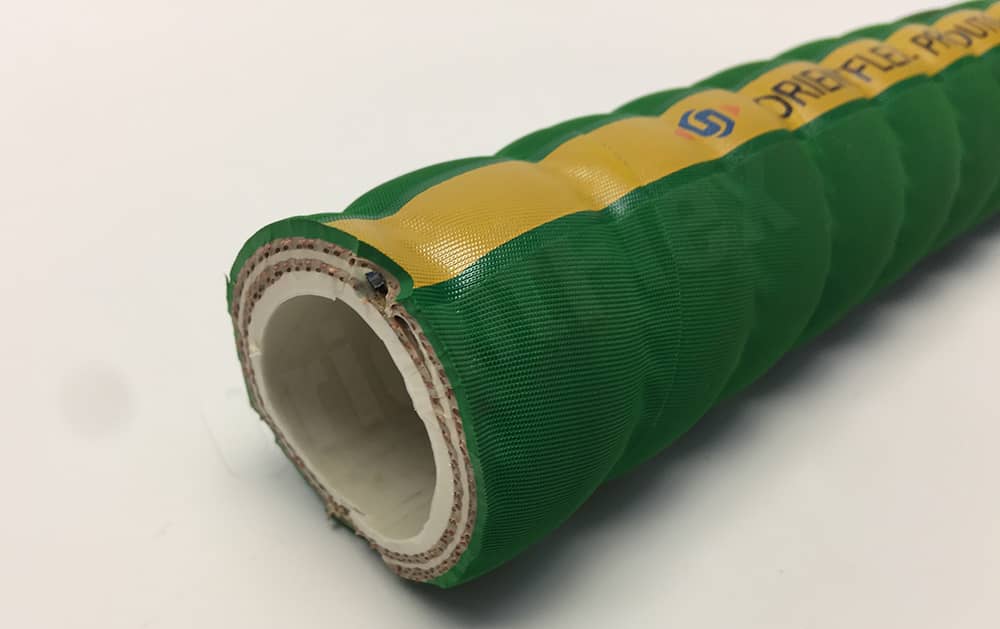
UHMWPE Chemical Suction Hose excels in handling a wide range of chemicals, petroleum products and oils.Special kink and crush resistant utilizing a multi-ply construction with Excellent for use in those demanding abusive transfer applications.
Chemical hose from Orientflex is regarded by as many as one of the best chemical rubber hoses available in the market today.There are 4 reasons why we recommend UHMWPE Chemical Suction Hose from Orientflex.
Good quality materials and construction:
Tube: White,Smooth Ultra High Molecular Weight Polyethylene(UHMWPE), EPDM.
Reinforcement: Multi plies high strength synthetic fabric and helix wire
Cover:EPDM resistant to chemical, weathering and ozone, blue, green wrapped or corrugated.
Variety of applications:
UHMWPE Chemical Suction Hose is designed for in-plant or tank truck use, suction and discharge of chemicals and solvents.
Rich Colors:
The main colors are inner white and outer green, inner white and outer blue (light blue/dark, blue are generally more light blue).And the color does not affect the price, black can also be produced.
Features:
Handle 98% of the chemical/acid;
Heat,weather,abrasion resistant EPDM cover;
Corrugated cover make hose more flexible;
Heavy duty construction for 250 PSI working pressure.
Orientflex, as a professional manufacturer and supplier of chemical rubber hoses, is looking forward to your quotation!
Chemical compatibility:
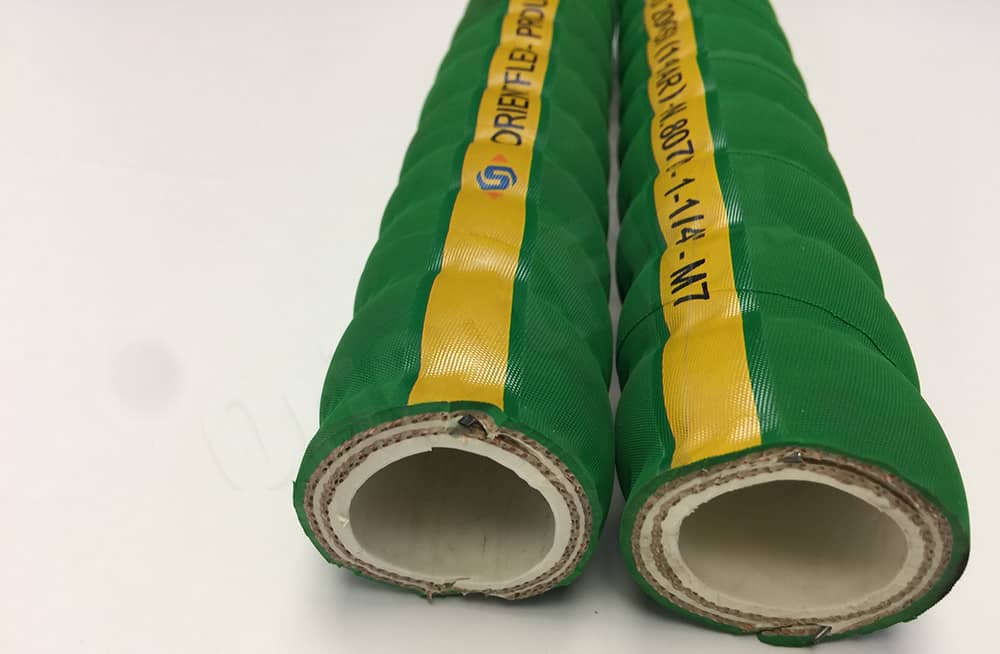
When transporting different fluids, the hose should show certain excellent chemical properties, which is called chemical compatibility.
Such as: low adsorption, good temperature resistance, not easy to aging, no swelling, corrosion resistance, low precipitation.
Chemical compatibility table specially developed for pump pipes should be used, not those developed for common pipes.
Because ordinary pipes only have general contact with chemical substances, while the peristaltic pump pump pipes are in contact with chemical fluids under pressure conditions, the chemical compatibility level of ordinary pipes and the chemical compatibility level of the peristaltic pump pump pipes cannot be equal.
When referring to the Chemical Compatibility Table, each component of the solution, not only the main component, should be checked for compatibility with the pipe to be used.
Some acids or solvents in contact with the pump line for hours or days, even trace, will cause sufficient damage to the pump line. The user should check each chemical in the solution to ensure that it is compatible with the selected pump line.
Chemical corrosion resistance
The chemical corrosion resistance of the hose decreases with the increase of temperature. Chemicals that do not affect the hose at room temperature may affect the hose with the increase of temperature. The hose should show good chemical properties when transporting different fluids.
Pressure
Back pressure occurs when a pump pushes fluid through a filter, or pushes fluid through a flowmeter or valve, or pumps fluid into a pressurized reaction vessel. The application of peristaltic pump is limited by the pressure bearing performance of hose.
If the system pressure exceeds the hose limit, the hose can expand, resulting in excessive hose wear or hose rupture. Factors affecting the pressure of the hose include: material, diameter and wall thickness ratio, etc.
Size:
The size of the hose directly affects the flow rate, and the inner diameter of the hose determines the flow rate, which is proportional to the flow rate.
Wall thickness affects the ability of the hose to bounce back under compression and also has a great impact on the hose life. Please refer to “Hose specifications” table.
Transparency:
Whether a transparent pipe should be used depends first on whether the operator needs to observe the condition of the fluid in the pipe at all times and whether the fluid is sensitive to light.
If the operator needs to observe the fluid, bubbles, particles, pollution and other situations in the tube at any time, it should choose polyethylene or silicone rubber and other transparent pipes; If the solution is not suitable for exposure, opaque pipe should be used.
Porosity:
For some gas-sensitive fluids, such as oxidized fluids, or anaerobic cell culture fluids, the user should consider the ventilation factor of the pipe. In general, silicone tubes are the most breathable. To the fluid that should not contact gas so, should choose the pipe with lower permeability.
Hose life:
Different hoses have different ability to withstand repeated extrusion and friction of rollers. Different pipe types, pipes, pump heads and running speeds have different life spans.
Choose long life, thick wall pipe, choose large flow pump, running at lower speed can obtain longer hose service life. See “Various Hoses Service Life Table” for specific data.
Let us help you find the best chemical delivery hose for your application.Welcome to consult us.